How To

Summer Exterior Painting in Australia: UV, Heat, Humidity and How to Specify the Right System

28/01/2026
Australian summer is hard on exterior coatings. Strong ultraviolet exposure, hot surfaces and humidity swings can all shorten working time, increase the risk of lap marks, and create conditions for premature paint failure if prep and timing are wrong. The good news is that summer can still be an excellent season to repaint, provided you plan around surface temperature, moisture, and daily weather patterns.

This guide is written to help you make defensible, practical decisions before you open the tin:

  • How UV, heat and humidity influence drying and curing
  • Why surface temperature matters more than air temperature
  • How to prep to protect adhesion
  • How to schedule work to avoid direct sun, dew and sudden showers
  • How to specify a summer-ready exterior system using a durable acrylic such as Wattyl Solagard

If you want to browse finish options within the Solagard range, start here:

1) Why summer painting fails: the mechanisms (not the myths)

UV affects more than colour

In practical terms, high UV exposure increases exterior weathering pressure. Over time, UV exposure can contribute to visible changes such as chalking and colour shift, particularly on high-exposure elevations. That means, for Australian summer projects, it is sensible to prioritise an exterior system designed for local exposure and maintenance realities.

Wattyl presents Solagard as an exterior system built for Australian conditions and positions it around durable performance outcomes such as resistance to common failure modes. If you are specifying paint for high-exposure walls, it is worth starting from the manufacturer’s positioning and recommended system, then pairing that with correct prep and application controls:

Solagard overview: https://wattyl.com.au/wattyl-solagard/

Heat creates “too-fast drying” and finish defects

High summer temperatures can push a paint film to set too quickly, especially on sun-baked substrates. The result is often not an immediate peel or blister. Instead, you will see quality defects first:

  • Lap marks from overlapping sections drying at different rates
  • Roller texture differences (stipple inconsistency)
  • Poor flow and levelling, particularly on broad wall areas
  • Dragging and tearing when brushing in hot, windy conditions

A key point is that these defects are frequently caused by surface conditions rather than “bad paint.” If the wall is too hot or you are painting in direct sun, your working time compresses, wet edges disappear, and the finish becomes harder to control.

Humidity and dew extend drying and raise risk

Humidity affects water-based paints by slowing evaporation. In summer, humidity spikes are common in many regions and can lead to:

  • Longer tacky time
  • Dirt pick-up while the coating is still soft
  • Less predictable recoat windows
  • Greater sensitivity to overnight condensation

Dew is a particularly overlooked risk. Even with no rain forecast, cooler shaded surfaces can develop condensation. If you coat a surface that has not fully dried from overnight dew, you increase the risk of adhesion issues at the interface.

2) Air temperature is the wrong metric: measure surface temperature instead

A common summer mistake is to check the forecast, see a reasonable air temperature, and assume the wall is safe to paint. In direct sun, the substrate can be significantly hotter than ambient air. What matters for application is the temperature of the surface you are coating at the time you coat it.

Practical recommendation: use an infrared thermometer

An inexpensive infrared thermometer lets you spot-check the wall or fascia before you begin and during the day. This is a simple control that helps you decide whether to paint now, shift to a different elevation, or pause until the shade returns.

Paint the shade, follow the shade

A reliable exterior workflow in summer is:

  • Start on the elevation that is shaded in the morning
  • Rotate around the house as the sun moves
  • Avoid broad wall painting in direct sun, especially on dark substrates
  • Use the hottest part of the day for sheltered areas, detail work, or prep tasks

This single approach reduces lap marks, improves finish uniformity, and decreases the chance that paint “skins” too quickly to bond as intended.

3) Selecting the right exterior finish for summer conditions

Exterior finishes are typically chosen by appearance, but summer performance is driven by a narrower set of realities: exposure, substrate movement, moisture, and cleaning needs.

Why a durable acrylic system is a practical default

For many Australian homes, a high-quality exterior acrylic is the practical default because it supports durability, flexibility and maintainability across a range of substrates. Wattyl positions Solagard as a tough exterior option intended to perform across varied climates and exposure conditions:

Solagard range: https://wattyl.com.au/wattyl-solagard/

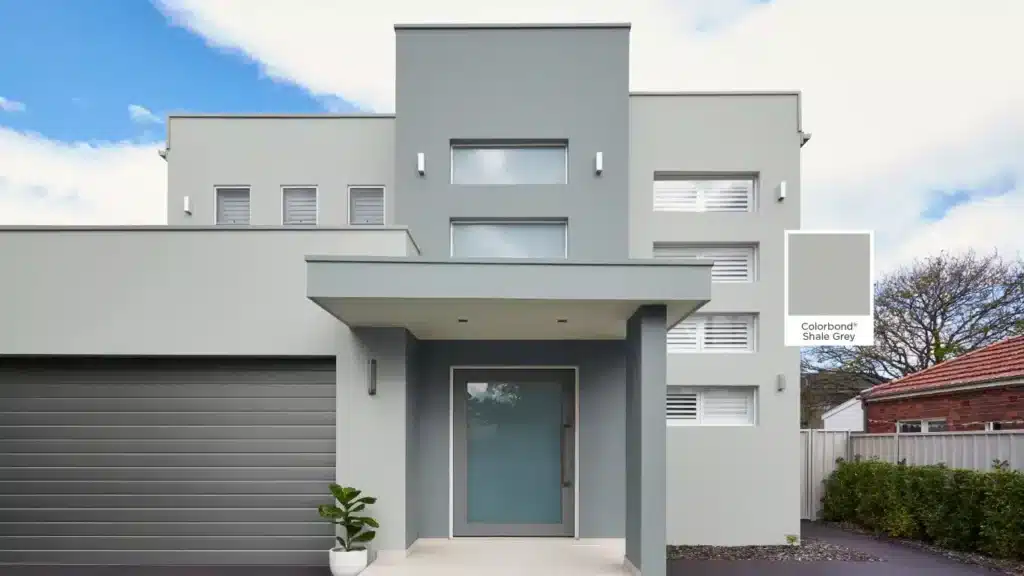
Solagard Colorbond Shale Grey

Low sheen is often the “workhorse” exterior finish

For broad exterior walls, low sheen is commonly selected because it tends to:

  • Conceal minor surface imperfections better than higher-gloss finishes
  • Provide a modern, architectural look that suits large areas
  • Balance cleanability and appearance for typical residential maintenance

If your client wants a consistent, forgiving finish across large wall planes, low sheen is typically the most practical starting point:

Solagard Low Sheen: https://wattyl.com.au/product/solagard-low-sheen/

4) Prep is not optional: it is your adhesion system

Most early exterior failures trace back to prep. Not because painters “did nothing,” but because critical contaminants or weak layers were left in place. In summer, this risk increases because surfaces are often drier, dustier, and exposed to more airborne residue.

Common root causes include:

  • Dust, dirt, salt and other contaminants
  • Chalking or friable surfaces not sealed
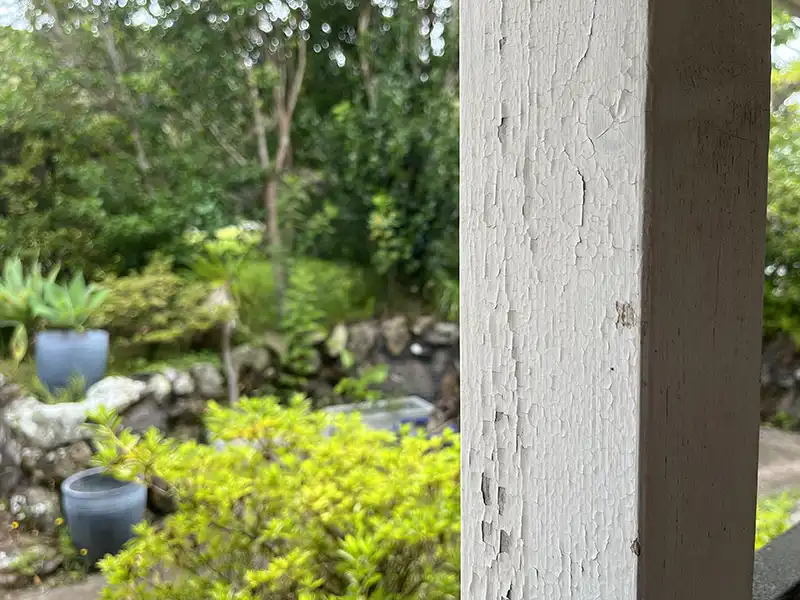
  • Loose or flaking paint not removed
  • Moisture still present in timber or porous masonry
  • Inadequate primer selection for the substrate
  • Repairs not properly feathered, sealed, or dried

Minimum prep standard (practical and defensible)

Use this as a baseline, then adjust for substrate type:

  • Wash down thoroughly – Remove dirt, cobwebs, – chalk and pollutants. In coastal areas, washing salt residue off is especially important before coating.
  • Treat and remove mould if present – Do not coat over active mould. Address the cause as well as the symptom, which usually means ventilation, drainage, or shading changes alongside cleaning.
  • Scrape and sand – Remove loose paint. Feather edges so there is no hard step from old film to bare substrate.
  • Repair and patch – Fill cracks, repair damaged timber, and replace failing sealants. If water gets behind the coating, even the best topcoat will struggle.
  • Prime where required – Bare areas, repairs and any suspicious or friable surfaces should be primed or sealed as appropriate. If you are unsure, treat unknown or chalky areas as high-risk and address them accordingly.

If you want to keep your internal references consistent, Wattyl’s “Articles” category is a useful hub for linking additional prep and planning content:

Articles: https://wattyl.com.au/category/articles/

5) Timing rules that matter in Australian summer

Rule 1: Avoid painting in direct sun on the working surface

Direct sun increases surface temperature and compresses working time. Even if the air feels comfortable, the wall can be too hot to maintain a wet edge and achieve an even finish. Instead, paint shaded elevations and rotate around the home with the shade line.

Rule 2: Plan around humidity and overnight dew

In many areas, early morning dew can sit on shaded walls, eaves and fascia. If you start too early:

  • The substrate can still be damp
  • The coating can be compromised at the interface
  • Drying and cure can become unpredictable

A practical approach is to start mid-morning once surfaces are clearly dry, then stop early enough that the coating has time to set before evening humidity rises.

Rule 3: Watch wind as closely as temperature

Wind does two things that matter in summer:

  • It accelerates drying and can worsen lap marks
  • It carries dust and debris into wet paint

If you are painting near roads, construction, or dry landscaping, plan the day when winds are lower or set physical controls such as temporary screens.

Rule 4: Respect product guidance and recoat windows

Even with a premium system, you still need to follow spreading rates, recoat windows and surface conditions. If you are using Solagard as the hero product, keep your specification tied to the recommended product and finish:

6) Application technique: what “good summer technique” looks like

Maintain a wet edge

This is the single best control for lap marks.

  • Work in manageable sections
  • Keep the roller loaded
  • Avoid over-spreading
  • Roll back into the wet edge rather than stopping on a dry line
  • Do not let cut-in areas dry completely before rolling adjacent sections

A wet-edge workflow is more important in summer than in mild seasons because the film sets faster and becomes less forgiving.

Control film build

A thin film can reduce durability. A heavy film can prolong drying and increase the chance of surface wrinkling in borderline conditions. The right outcome is consistent coverage that aligns with the product’s recommended spreading rate.

Tool selection affects summer outcomes

  • Use an appropriate nap length for the texture
  • Maintain consistent pressure
  • Replace shedding or degraded covers
  • Keep brushes and rollers clean, especially if working in dusty environments

Work with shade, not against it

For broad wall areas, your best quality control is sequencing:

  • Identify the highest-exposure elevations (commonly west and north)
  • Paint them only when shaded
  • Move around the home as shade shifts

This reduces visible lap joins and supports a more even appearance across elevations.

7) Colour selection in summer: function first

Colour selection is not only aesthetic. It changes how your home looks under strong sun and how quickly imperfections become visible.

Light colours can reduce maintenance visibility

Lighter colours can make dust and fine dirt less obvious than very dark tones, particularly on walls exposed to street dust, coastal haze, or dry landscaping.

If your brief includes whites or off-whites, Wattyl’s whites palette is a practical internal link for narrowing options and testing undertones:

A practical, low-risk colour testing workflow

  • Paint large swatches rather than relying on tiny chips
  • Test on multiple elevations
  • Observe morning, midday and late afternoon
  • Check the swatches near fixed elements like brick, roof colour, paving, and landscaping

This reduces repaint risk and improves the chance your selected white or neutral will behave as expected under Australian sun.

8) Specifying the system: a summer-ready exterior schedule

A defensible paint specification should be clear enough that two different crews could follow it and achieve similar outcomes. Use this structure:

1) Substrate identification

  • Previously painted timber weatherboards
  • Bare timber elements
  • Masonry or rendered walls
  • Fibre cement cladding
  • Previously coated surfaces of unknown coating type

2) Prep requirements

  • Thorough wash-down
  • Mould treatment and removal where present
  • Scrape and sand loose coatings
  • Feather edges
  • Repair defects and replace failed sealants
  • Prime bare or repaired areas as required

3) Topcoat system

  • Two coats of an exterior acrylic system suitable for Australian exposure such as
  • Wattyl Solagard in the selected sheen
    Select sheen by application zone:
    1. Broad walls: low sheen is typically the most forgiving
    2. Trims and fascia: semi gloss can be used where a tougher, more wipeable finish is desired

Wattyl Solagard product options:

4) Environmental controls (summer-specific)

  • Paint shaded elevations, follow the shade line
  • Avoid coating dew-affected or damp surfaces
  • Avoid direct sun on hot substrates
  • Allow adequate dry time before evening humidity increases
  • Avoid windy windows likely to contaminate wet film

This structure makes it easier to explain to homeowners, property managers, and crews why the job must be sequenced the way it is.

9) The first week after painting: protect the early cure

A coating can be dry to touch but still developing hardness. In the first week:

  • Avoid aggressive washing
  • Minimise sprinkler overspray onto fresh walls
  • Expect the film to harden progressively
  • Avoid installing fixtures that may scuff or compress the new film too early

If you are in a coastal or dusty environment, schedule the first wash-down only after the coating has had time to cure per product guidance.

Project checklist (copy and paste)

Before you start

  • Surface sequencing planned (which elevations are shaded when)
  • Wash-down complete and surfaces fully dry
  • Mould treated and removed where present
  • Loose paint removed and edges feathered
  • Repairs completed and sealants addressed
  • Priming plan confirmed for bare and repaired areas
  • Product selected: Solagard system and sheen confirmed
      1. https://wattyl.com.au/wattyl-solagard/
      2. https://wattyl.com.au/product/solagard-low-sheen/
  • Weather checked for storms, wind and overnight humidity spikes

During application

  • Work in shade, maintain a wet edge
  • Keep consistent coverage and rolling pattern
  • Do not push recoat windows if humidity is high
  • Stop early enough to avoid evening dew risk

After application

  • Keep sprinklers off fresh paint
  • Avoid abrasive cleaning in early cure
  • Plan a follow-up inspection for touch-ups

FAQ

1) Can I paint exterior walls in direct summer sunlight?

It is higher-risk. Direct sun increases surface temperature and shortens working time, which can increase lap marks and reduce finish consistency. A lower-risk approach is to paint shaded elevations and move around the house as the shade line shifts.

2) What matters more, air temperature or wall temperature?

Wall temperature. A wall in direct sun can be significantly hotter than the surrounding air. Measuring surface temperature helps you decide whether to paint now, switch elevations, or pause.

3) Why do lap marks show up more in summer?

Heat and wind can make the paint film set faster. If sections dry before adjacent areas are applied, overlaps can show as visible lap lines. Maintaining a wet edge and painting in shade are the most effective controls.

4) Why can exterior paint blister in summer?

Blistering can occur when moisture is trapped in the substrate or when heat drives vapour pressure beneath the film. Painting over damp surfaces, skipping prep, or coating hot substrates increases risk.

5) How do I choose between matt, low sheen and semi gloss outside?

For broad walls, low sheen is often chosen because it balances appearance and forgiveness on imperfect surfaces. Matt can hide defects well but may be more sensitive to marking depending on the surface and exposure. Semi gloss is commonly used on trims and fascia where wipeability and a sharper finish are preferred. Solagard sheen options:

6) What is the best time of day to paint exteriors in summer?

Generally, mid-morning onward once surfaces are dry, prioritising shaded elevations. Early mornings can carry dew risk; late afternoons can run into evening humidity and condensation risk.

7) Do I always need primer for an exterior repaint?

Not always, but bare substrate, repairs, stains, chalky surfaces, and uncertain existing coatings typically need appropriate priming or sealing. Priming decisions should be based on substrate condition and compatibility, not habit.

8) How can I reduce dirt sticking to fresh exterior paint in summer?

Avoid painting in windy, dusty windows, keep the surface clean before coating, and allow adequate cure time before any wash-down. Planning the job to minimise tacky time exposure is critical.

9) Is Wattyl Solagard appropriate for Australian exterior conditions?

Wattyl positions Solagard as an exterior system designed for Australian exposure and weather conditions. Review the range and select the sheen and system suitable for your substrate:

Solagard range: https://wattyl.com.au/wattyl-solagard/

10) Where can I browse exterior-friendly whites for summer?

Wattyl’s whites palette is a useful starting point for testing undertones on your own elevations:

Whites palette: https://wattyl.com.au/shop/colours/?palette=whites

Articles you may also like

News 30/01/2026
2026 Pantone Colour of the Year - Controversy, Confusion or Clever?

For the first time in its 27-year history, the Pantone ...

right arrow
News 28/01/2026
Outdoor Entertaining Paint Plan: Alfresco Walls, Eaves and Trim for a High-Wear Australian Summer

An alfresco area is one of the most used zones ...

right arrow
News 05/12/2025
Disposal & Wash-Up: What to Do with Leftover Paint in Australia

Leftover paint is a fact of life. The good news: ...

right arrow
;

We are here for you, ask us anything

Leave your enquiry and details below, and we’ll get back to you as soon as possible.